Pro-Fidesz “security expert” found a Ukrainian connection to the Kraków attack, sharing an AI-generated image from a suspicious Telegram channel
The channel supposedly belonged to the attacker, yet its content continued to be actively edited even after his death.
"Well, so much for claims that the Kraków attacker was far-right... Violent, anti-Christian and 'rainbow' content was found on his laptop and phone..."
This was the comment Georg Spöttle, a pro-Fidesz and pro-Russian "security policy expert", added to an image he posted on his Facebook page on the afternoon of 9 November. The image depicted an armed individual wearing a mask and a military vest bearing the Ukrainian flag.
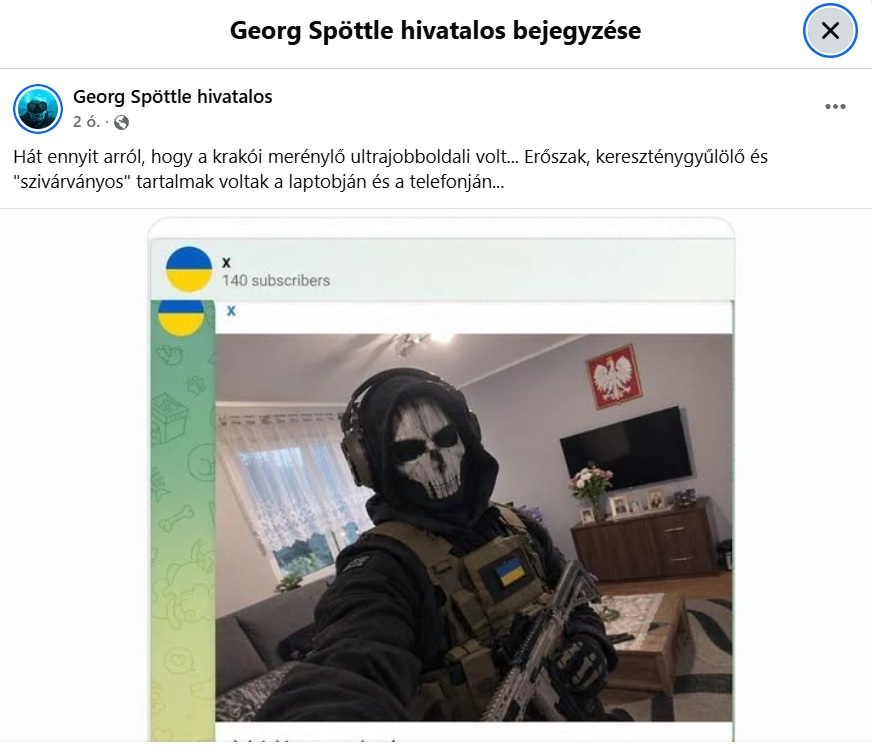
Journalist Szabolcs Panyi described the image as an AI-generated fabrication, linking it to the Kremlin's anti-Ukrainian disinformation campaign. According to Panyi, the campaign sought to establish a connection between Ukraine and Michał Oksiński, the perpetrator of the attack that killed six people in central Kraków on 7 November. After being shot by police officers, Oksiński died from his injuries early morning on 9 November.
The image Georg Spöttle shared circulated online in several languages, accompanied by the message that it originated from Oksiński's Telegram channel and had been posted by the attacker several days before the Kraków shooting.
Facebook had already added an "altered photo" label to Spöttle's post, citing fact-checking articles published by AFP and the Italian outlet Open.
These fact-checks present evidence not only that the image was created using artificial intelligence, but also that the Telegram channel in question continued to be edited after Oksiński's arrest and death.
AI-Generated image
According to the SynthID AI detection tool, the image featuring the Ukrainian flag that Spöttle shared was generated or modified using OpenAI’s programme.
SynthID is a digital watermarking technology developed by Google, which is automatically embedded in images created or edited by Google's image generators and those of other companies participating in the initiative.
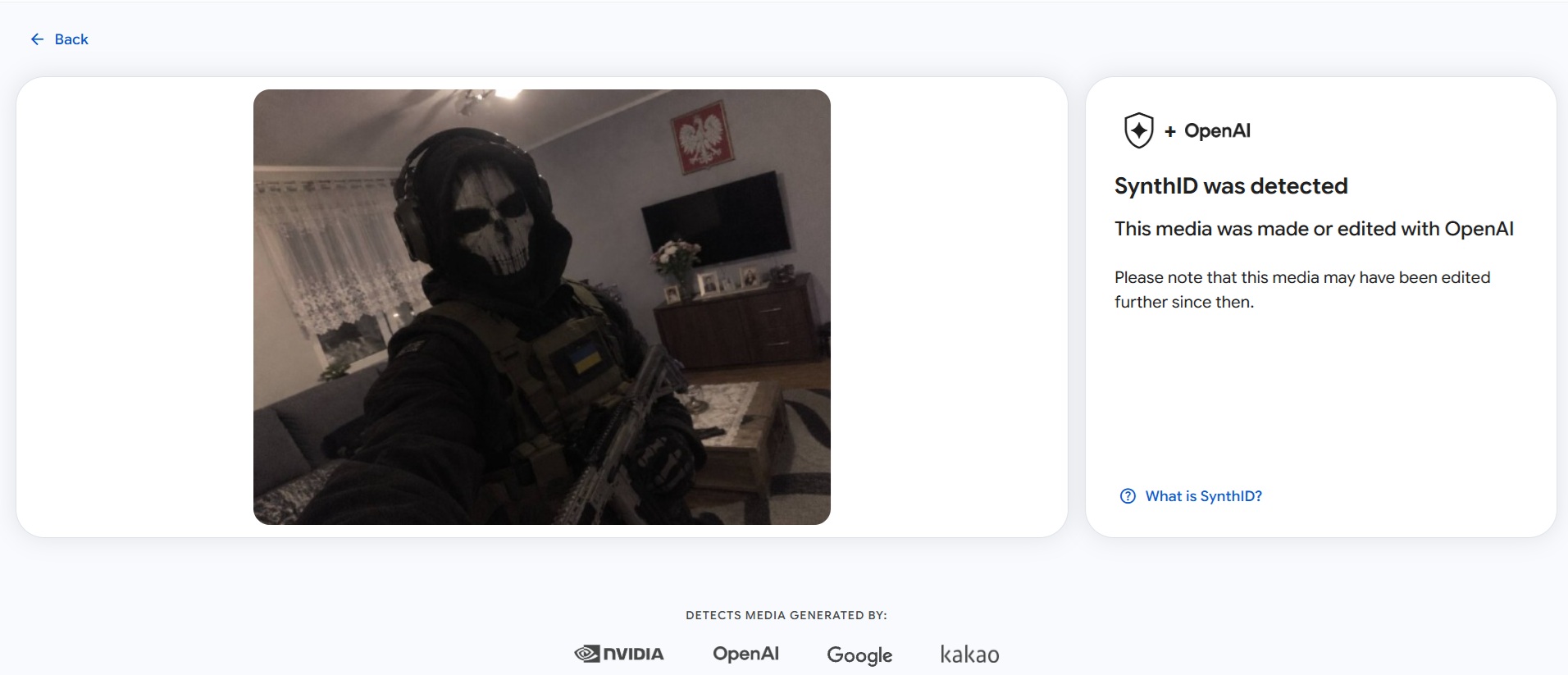
As we explained in an earlier article, this method is not 100 per cent reliable. Moreover, a positive detection result alone cannot establish whether an image was entirely AI-generated, substantially modified using artificial intelligence, or merely subjected to AI-assisted editing that did not affect its actual content, such as contrast adjustments or the application of filters.
Nevertheless, several visual elements in the image shared by Spöttle suggest that it was generated from scratch using artificial intelligence.
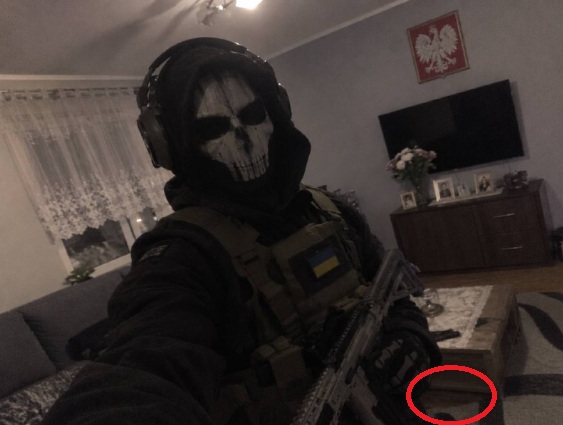
The conspicuous placement of the Ukrainian flag and the Polish coat of arms may raise suspicions. Meanwhile, the family photographs positioned in front of the television and the illogically-placed flowerpot suggest that the AI attempted to generate a stereotypical living-room setting.
AFP also identified a specific visual inconsistency: at one point, the carpet appears simply to disappear in front of the coffee table.
Posthumous Telegram posts
Even if the image was AI-generated, it remains theoretically possible that Michał Oksiński himself created it and posted it on his Telegram channel before the attack.
However, there is no evidence that the channel actually belonged to the attacker. What is certain is that someone else had access to it, as its content continued to change after Oksiński's arrest and subsequent death.
The AI-generated image in question is no longer available on the Telegram channel with the identifier @michaloksinski. However, when it was still accessible, it displayed a publication date of 3 November. Nevertheless, investigations conducted by AFP, Open and the Polish fact-checking organisation Demagog found evidence that the post had been edited on 8 November, after the attack and the perpetrator's arrest.
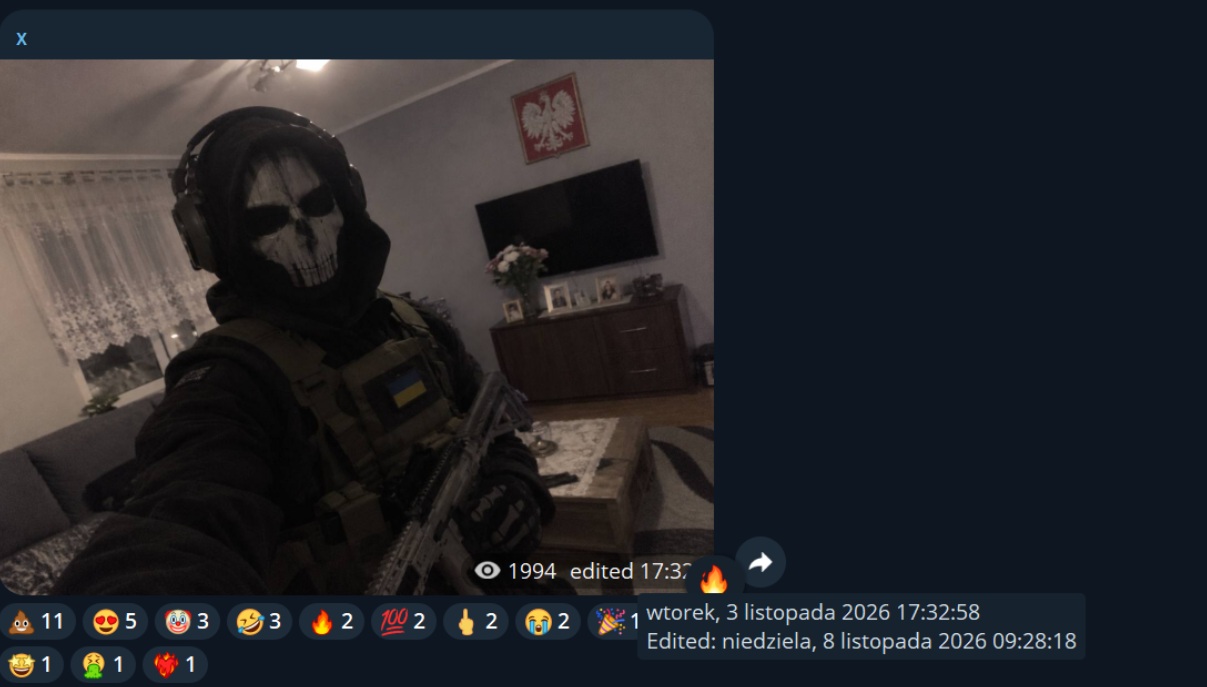
The Wayback Machine created three archived snapshots of the Telegram channel on 8 November, and the content changed between these three points in time.
- In the first archived snapshot, taken before 6 a.m., the post containing the AI-generated image included the caption "thanks for the gun, dad". The most recent post at that point was dated 4 November and displayed the date of the attack (11/7/2026).
- By the second snapshot, taken shortly after 9 a.m., the caption beneath the image had disappeared. Meanwhile, a new post dated 8 November had appeared, featuring the song Summer Madness.
- In the third snapshot, taken at approximately 12:30 p.m., another post dated 8 November appeared, this time featuring a photograph of the attacker.
The archived screenshots also reveal that all the other posts on the channel had been edited after their original publication, including the post displaying the date of the attack.
One possible explanation is that someone retrospectively modified the existing posts of a previously established Telegram channel, replacing their original content to create the impression that the attacker had shared an image of himself wearing the Ukrainian flag and had announced the date of the attack in advance.
This hypothesis is further supported by a video fact-check published by CBC, which examined the page's HTML code and found that the channel had originally been named "ConeticNews Messages", rather than @michaloksinski.
On the morning of 10 November, even more unusual developments occurred on the Telegram channel.
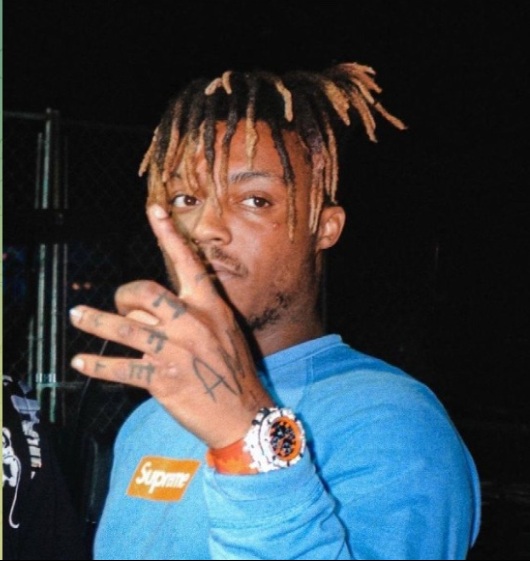
We observed a version of the page in which both its profile picture and the image attached to the 3 November post had been changed to photographs of American rapper Juice WRLD.
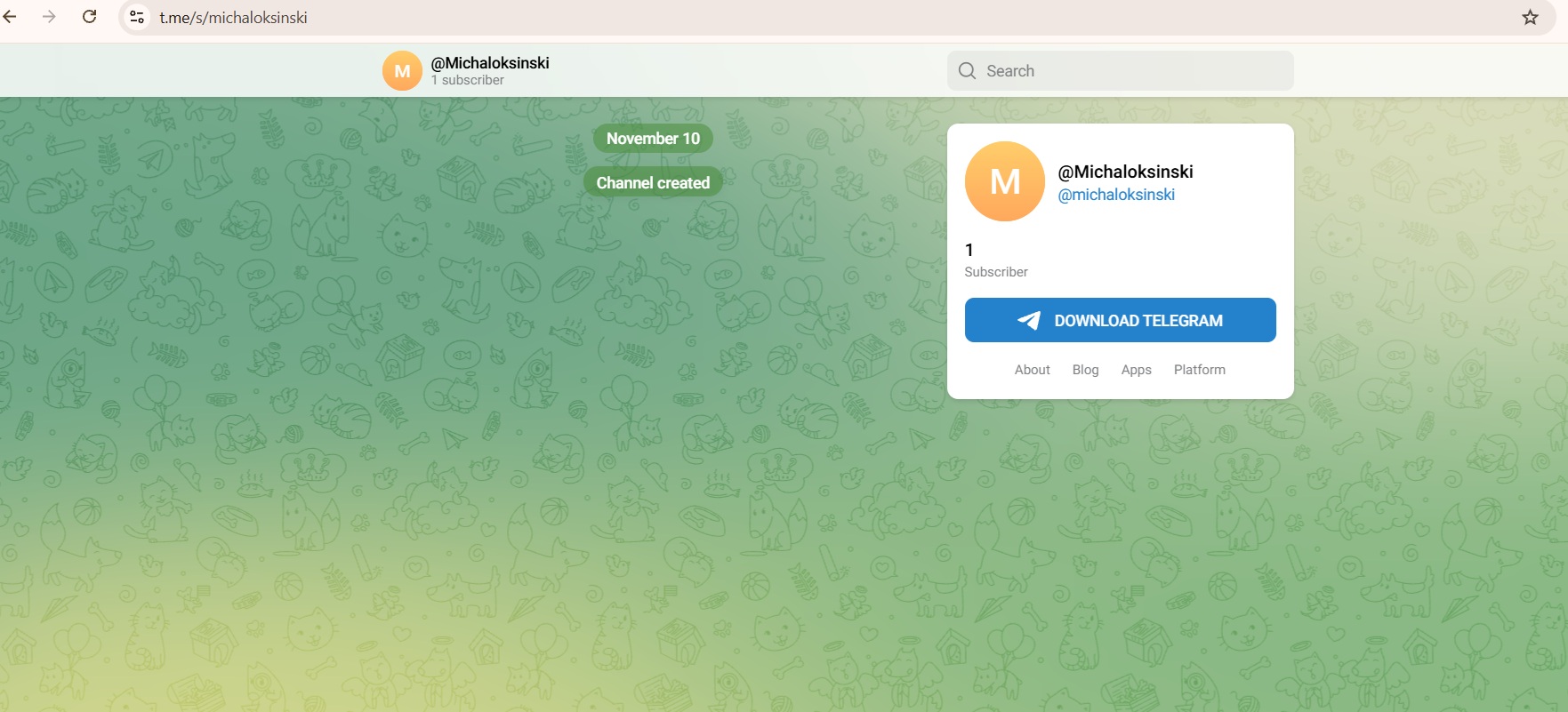
Subsequently, all previous posts and subscribers disappeared from the channel, leaving only an emoji published as a post dated 10 November.
A repeat disseminator of Russian narratives
During the Fidesz government's time in power, Georg Spöttle was a frequently featured "security policy expert" within the pro-government media network that developed during that period, and he also contributed articles to the pro-Fidesz site Pesti Srácok. Since 2022, he has primarily disseminated narratives aligned with Russia's official position concerning the war in Ukraine, frequently amplifying false reports originating from questionable sources that appeared to support these narratives.
His media appearances have declined recently, but his YouTube channel remains active alongside his Facebook page.
In 2025, investigative journalism outlet Direkt36 reported on Spöttle's connections to Russian intelligence services. According to information obtained by the outlet, these connections were identified as a national security risk by Hungarian state authorities during the national security vetting of a close acquaintance of Spöttle.
Previous attempts to establish a Ukrainian connection, and the Russian link
The AI-generated image depicting an armed individual wearing a Ukrainian flag, which Georg Spöttle shared, was not the first piece of false or misleading content circulated on social media in an attempt to establish a connection between the Kraków attacker and Ukraine.
Just a few hours after the attack, rumours had already emerged on social media linking the perpetrator, Michał Oksiński, to the Ukrainian armed forces. These posts attempted to associate the 24-year-old attacker with an American private military organisation called Forward Observations Group (FOG), which supports Ukraine's defence against Russia.
The alleged connection was based on a patch visible on Oksiński's clothing during his arrest, featuring a symbol associated with an eighteenth-century pirate. Several Hungarian-language Facebook posts repeated these allegations that same evening, prompting Lakmusz to investigate the claims.
We demonstrated that the patch visible on Oksiński's clothing, which had been presented as evidence of a Ukrainian connection, was not actually identical to the symbol used by the American organisation.
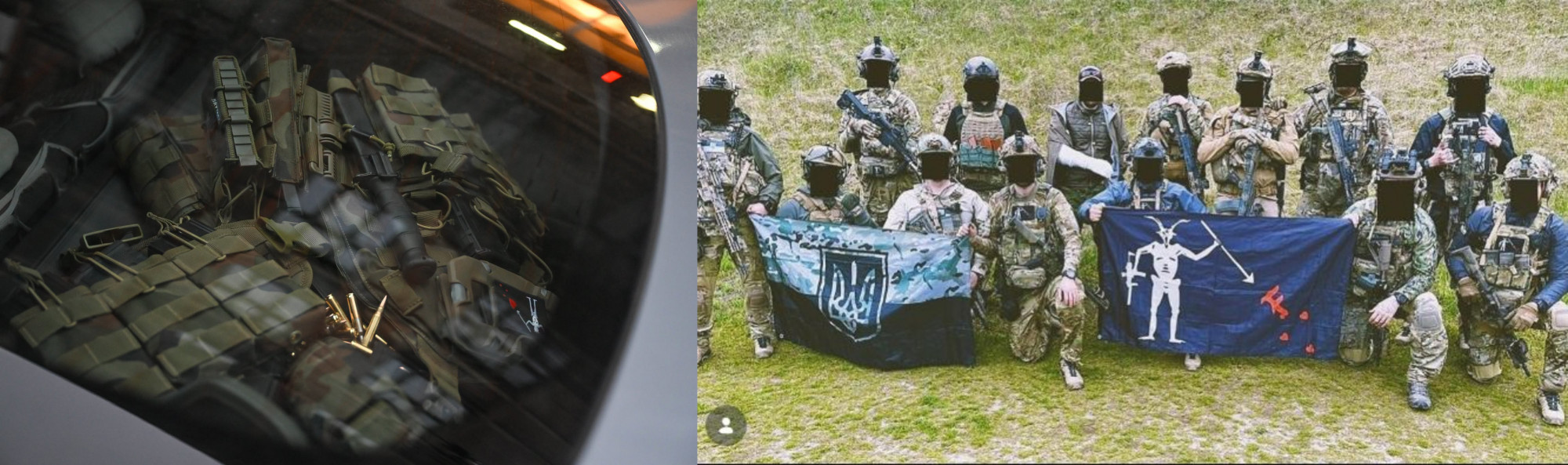
Following the publication of our article, we learned that the Polish investigative journalism outlet OKO.press had identified the rumours about the patch as part of a Russian disinformation operation. The outlet also identified the earliest social media post containing the claim, which appeared at 8:30 p.m. on Saturday on a Russian-language Telegram channel called Shot.
The Shot channel is a well-known mouthpiece of the Kremlin and belongs to the portfolio of the Russian media conglomerate News Media. The media company is part of the business interests of Russian oligarch Yuri Kovalchuk, who is often described as Vladimir Putin's "personal banker".
The tabloids and news outlets belonging to the conglomerate regularly disseminate Russian disinformation originating from the Kremlin. For example, life.ru recently appeared in our investigation into an alleged Ukrainian corruption case involving 140 billion, as one of the outlets spreading the false report. According to OKO.press, the board of directors of News Media Holding includes Alina Kabaeva, Putin's alleged partner.
Cover image: Annamari Dezső, using the photo of Balázs Kristóf/444
Translation: Ádám Dániel
Follow us
Follow HDMO on our social channels to stay up to date with our latest news.